
Mute Swan
Cygnus olor
<
>


 Type
Type BirdStatus
 Protected
 WidespreadCommonSeason
 Spring
 Summer
 Autumn
 Winter
 Anywhere along the canal; nests tend to be built a distance back from the towpath, often amongst vegetation, for safety.
One of the most iconic British birds, the Mute Swan is a very large waterbird that's famed for its graceful glide and beauty. They're also associated with love and romance due to the fact that a pair make the shape of a heart with their two necks, and because they usually (not always) mate for life.
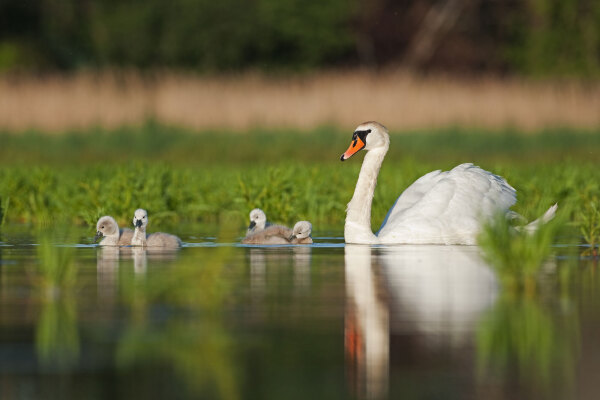
Found throughout town and countryside, Mute Swans are a well-loved sight on the Montgomery Canal, where they also breed every year. The male (called the 'cob') and the female or 'pen' are both involved in parenting, the cob guarding the nest - often fiercely - while the pen is incubating the eggs.
They can have up to around 7 eggs, which both sexes incubate for between 35-42 days. Though not all will hatch into downy brown-grey cygnets, and indeed not all the cygnets will survive - they can be predated upon by species such as Pike.
These birds feed on plants, particularly waterweed. If you're feeding them, they love eating things like sweetcorn, potatoes, lettuce, oats and seeds (bread is not very good for them).
Most Mute Swans are ringed when they are cygnets and their rings act like fingerprints, identifying the bird and where it's come from. Some birds will stay in their territories year-round whereas other may form winter flocks.
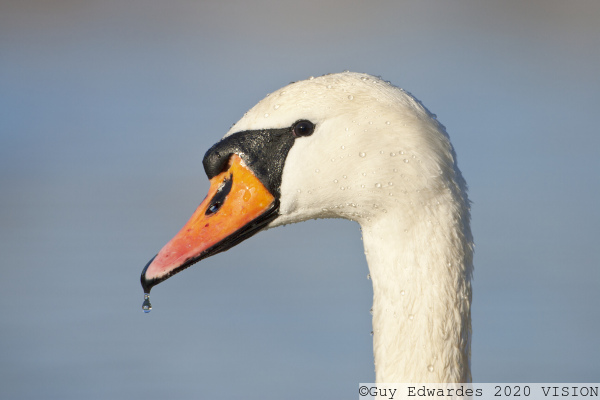
Unmistakeable with its all-white body and reddish-orange bill with black 'knob' at its base. Males and females can be told apart as males tend to be a bit bigger with larger knobs on their bills.