
Mallard
Anas platyrhynchos
<
>


 Type
Type BirdStatus
 CommonWidespread
 ProtectedSeason
 All Year Round
 All along the canal, usually on the water but often on the towpath too
To many people, Mallards are just ‘ducks’ – but in reality they are just one of many different species we have in Wales. The most familiar of the dabbling ducks – those which feed by floating on the surface and tipping themselves forward to graze on underwater plants or grab insects – they’re found in the UK, right across Europe, Asia and North America. The birds you see here may be resident breeders or migrants – as many of the birds that breed in Iceland and northern Europe spend the winter here.
A frequent sight along the Montgomery Canal, along with almost every other water body in the country, Mallards are our commonest duck. Despite their prevalence, they remain a firm favourite amongst children and families and feeding them is, for many people, one of their first introductions to nature.
Mallards start to pair up in October and November and usually nest in around March – their nest sites are very varied in type and can be in wood piles, old crow nests, hay stacks and even large flowerpots on balconies. The female builds the nest herself from leaves, grasses and lines it with down plucked from her own chest. Eggs can be laid from mid March until July and are usually in a clutch of around 12 eggs. She lays more than half her body weight in eggs across a couple of weeks so it’s a tough, stressful time for her, while the male’s job is over once the clutch has been laid.
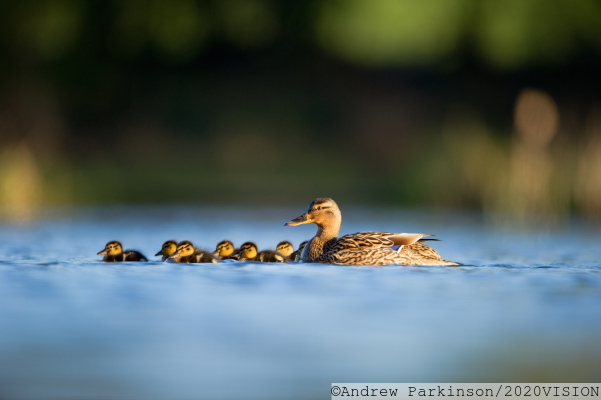
The sight of up to a dozen tiny golden ducklings tailing their mother is one of the most magical sights on the canal, regardless of how common the birds are. However, not all will survive. The sooner they get from their nesting site on land to water where they can feed the better their chances. They rely on their mother for waterproofing, protection and teaching about food. After 50-60 days they have fledged and are independent; when they are a year old they can breed themselves.
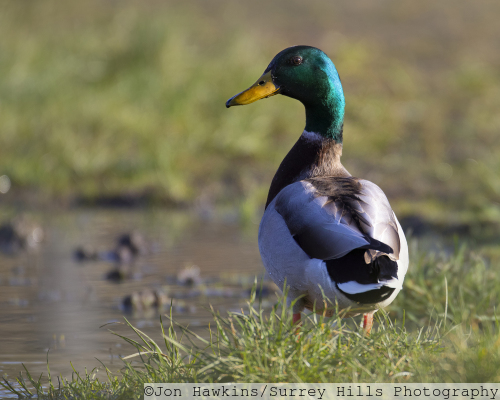
Females are brown and mottled, whereas the breeding plumage of males includes metallic green heads, maroon-brown chests and bright yellow bills.